dinsdag 7 december 2010
China becomes wealthier, luxury brands boom
While luxury carmakers are putting more resources in the Chinese market, they have to take one thing into account: the unique psychology of Chinese people. Their pragmatism is one of the characteristics they have to deal with. Luxury car manufacturers use several marketing strategies to excite the Chinese buyers.
To make luxury cars more affordable for the Chinese population, they introduced entry-level luxury models and they offer cheap credit options. To lower the price even further, Mercedes launched the environment-friendly 1.6-liter C-Class, which qualifies for a sales tax cut and a subsidy, allowing young people to buy their dream car too.
Nick Z.
Source: People's Daily Online
Are luxury brands sustainable?
Luxury brands had a hard time facing the credit crunch, they had to lower their prices, but not too low, in order to keep their credibility and stay exclusive. Many people have lost a lot of money, and so they were forced to buy inferior or sumptuous goods instead of their usual luxurious products.
The managers of the luxury brands had to work out a new brand strategy. It's important that the strategy is flexible enough to easily adept with changes in economy but also be strong enough to compete with the risks that these brands have. Brand management is clearly an important subject of healty luxury brand. The managers should be aware of the value of their products, so they can have better customer relations. They also have to understand the changes in customer psychology and their shopping habits, in order to create a good marketing strategy.
Jana Vastenavondt
http://ezinearticles.com/?luxury-Brands-and-Their-Sustainability&id=5150002
maandag 6 december 2010
Which luxury brand do you prefer?

Luxury Brands = Luxury Shares?
- LVMW (€ 120)
The LVMH group holds over 50 luxury brands. Henk Potts (equity analyst for Barclays Wealth) sees LVMH as a core holding in its sector, due to its high quality brands, strong management team, and significant earnings growth potential in addition to its recent acquisition of a stake in Hermès.
Rating: buy 23, hold 10, sell 2.
- BMW (€ 59)
In 2009, Bayerische Motoren Werke (BMW) has sold almost as much units as in 2007 (before the financial crisis) and their global sales increased by 13% in the first half of 2010. It seems like the worst recession is behind for luxury car makers. According to Mr. Potts, the roll-out of the new series five has put BMW in a strong position.
Rating: buy 28, hold 12, sell 4.
- Polo Ralph Lauren ($ 110)
In July, these shares have hit a low, but since then they have recovered by 40% due to increased global demand. Forbes blogger Zacks states they are "on sale" and recommends investors to buy them now.
Rating: buy 5, hold 8, sell 0.
- Burberry: buy 3, hold 19, sell 3.
- Mulberry: buy 2, hold 0, sell 0.
- Richemont: buy 13, hold 14, sell 3.
- Rolls-Royce: buy 10, hold 9, sell 7.
- Tiffany's: buy 10, hold 9, sell 2.
- Diageo: buy 20, hold 12, sell 3.
- Inchcape: buy 7, hold 4, sell 3.
Nick Z.
zondag 5 december 2010
Lol, humor and luxury!
Although humor and luxury seems incompatible, exclusive brands start combining them in order to reach Generation Y.
Imagine a prestigious serious man watching a commercial of Hermés featuring a fingerboard making tricks on some clothing products. Odd? Yes, but also childish funny.
Generation Y are known as people born around the mid-1980's and later. This means that nowadays they work and buy goods. This generation, also called the Millennials, is known for their tech-savvy nature and is less formal oriented.
Marketing managers of luxury brands believes that Millennials are more open minded and might be attracted to humorous advertisements. The Gen-Y luxury consumers might appreciate the childish humor and could be seduced to buy the featured product. Another strong point is, that in this way they can communicate to people who are not interested in the traditionally focus on respect, formality and prestige of luxury brands. They also show the brands’ product portfolio.
Though this innovative form of advertising seems promising, humor remains something personal. Not all luxury consumers are pleased with hilarious commercials. Most of the marketing managers are aware of this and are not fond of this new trend.
Andreas Verleysen
http://luxurysociety.com/articles/2010/11/humour-the-next-trend-in-digital-luxury-marketing
http://www.youtube.com/watch?v=wKVeSMDewnA&feature=player_embedded#!
Luxury brands on social networks

zaterdag 4 december 2010
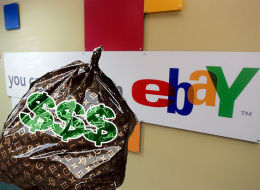
eBay not liable for counterfeit luxury products
The first trial dates from 2004, when a federal judge and later also a U.S. appeals court ruled that eBay cannot be held liable for trademark infringement, following the argumentation above. The court also acknowledged that eBay takes sufficient efforts to reduce the amount of counterfeit goods sold on their websites to a minimum.
Tiffany was not pleased with this ruling, and appealed to the Supreme Court. They said eBay has made a profit of $4.1 million from sales of counterfeit Tiffany jewelry between April 2000 en June 2004. eBay asked to reject this appeal, arguing that trademark laws for internet commerce are not to be changed by the courts, but by lawmakers in Congress. They also noticed that they already spend as much as $20 million per year on anti-fraud measures. On Monday, November 29, 2010, the Supreme Court rejected Tiffany's appeal without further comment.
Nick Z.
Source: Reuters
dinsdag 30 november 2010
Fashion meets technology
Fashion designers are starting to implement technological features in their high-priced clothes. This way, they hope to prevent copying by regular fashion companies.

A week ago, clothing store H&M released a new collection “Lanvin for H&M”. With other words: H&M is going luxury. This way, people will be able to buy clothes that look big-ticket but aren’t too expensive.

How do the high-end clothing designs react to this? They complain about fashion companies knocking off runway clothes and getting it in their stores before it reaches the outlets of high-end designers. To prevent them from doing this, they created a hybrid: smart clothes. Engineers and designers started collaborating to add technology to fashion clothes.
The results were dresses equipped with motion sensors that makes its embroidery illuminate while walking. Another example is the Novero Victoria chain (price: $100,000) featuring a two-carat diamond which is also a headset that supports Bluetooth 2.1 and hands-free voice calling.
High-end clothing labels believe fashion companies won’t be able to adapt this technology as quickly as they normally would. “Try copying these, H&M! “
Whether it involves buying normal clothes or purchasing a classy watch, it seems to me that technology is becoming an important part of shopping. Preventing imitation, adding more value, online selling, helping customers, it’s all encouraged by technology and all part of the future world of merchandising.
Andreas Verleysen
http://www.forbes.com/2010/11/08/katy-perry-rihanna-technology-fashion.html
http://video.forbes.com/fvn/tech/high-tech-luxury-fashion-trends
zondag 28 november 2010
After the economic gloom, wealthy consumers are spending their money again on luxury goods. However, luxury retailers will have to change the way they sell their products, which is one of the consequences of this economic downturn.
The luxury industry’s usual customers, the so-called baby boomers, have lost a lot of money with their investments. As a result, the luxury retailers should now focus on a new generation of consumers.
Nevertheless, the luxury market could have some problems dealing with the characteristics of their new customers. For example, they marry at old age, and since married people are in general wealthier, they have consequently less money to spend on luxury goods. Furthermore, this new generation does not value status symbols as the baby boomers did. The luxury retailers should therefore adjust the value message of their goods.
We conclude saying the luxury retailers have to reconsider their focus on the market, due to the economic crisis, but consequently being forced to overcome some obstacles.
Nicholas Vijverman
http://www.dailyfinance.com/story/baby-boomers-no-longer-luxury-retail-future/19705000/
zaterdag 27 november 2010
The iPad as a new sales weapon
Luxury carmaker Acura created an iPad application of its website to help its dealers to improve the selling process. The difference with the regular customer website, is that the application is optimized to help the salesperson, by distilling talking points and displaying short videos for the potential buyers. It provides a great assistance for sellers to explain new car technologies in a customer-friendly way.
Audi developed a similar app for its luxury sedan, the Audi A8. iPads have been set up in 115 Audi dealerships, allowing customers to view features and configure a car. They will also be used to guide a buyer through the car's features at the moment of delivery. Audi plans to make more iPad applications, not only for other car models, but also to sync a mobile device with the car and optimize its entertainment system.
Nick Z.
Source: Automotive News
zondag 21 november 2010
Heritage luxury
These days' luxury brands are suffering with the issue of how they can combine their past and the future. For some brands, on the one hand, is the past too serious for this modern age, but on the other hand it also helps to have a reliable credibility to assure your customers.
But how can your brand stay youn while you have to keep a link with the history of the brand? Mr. Marzotto, who is a relative of the previous owners of Valentino, is now hired to resuscitate the house of Vionnet. He said that you always have to respect the codes but also to reinterpret them. So the desingers should never invent just things, but they have to know the brand history and be inspired by this history.
Jana Vastenavondt
http://www.nytimes.com/2010/11/09/fashion/09iht-rsuzy.html?_r=2&pagewanted=2&q=luxury&st=cse&scp=7
zaterdag 20 november 2010
Luxury market slowly emerging from global recession

Although the sales in the luxury industry are bouncing back in 2010 after the global recession, the luxury goods market should not be too optimistic about the future...
After undergoing a huge drop in sales of around eight percent in 2009, the luxury industry estimates a growth in sales of around ten percent by the end of the year 2010. Nevertheless, this expansion will not continue to rise, due to two big problems.
On the one hand, the luxury market will have to deal with more cautious consumers, who have realised they are vulnerable, certainly in hard economic times.
On the other hand, they will be facing another, more important problem, due to changing demographics. Studies in the luxury industry have shown that mainly people between the age of 35 and 55 buy luxury goods. However, this baby-boom generation is entering retirement and as a result, sales of luxury goods will not be growing significantly in the next decade.
As a conclusion, we can say that the luxury industry will be facing a hard slog in the next ten years, although the global recession is already behind us.
Nicholas Vijverman
http://economictimes.indiatimes.com/news/international-business/Luxury-market-slowly-emerging-from-global-recession/articleshow/5992623.cms
vrijdag 19 november 2010
REPLY: Virtual selling on the internet
I’d like to give my opinion on Nicholas’ article concerning e-commerce of luxury brands.
Bearing in mind the leading article (Understanding the world of international luxury brands: the dream formula), the subject ‘e-selling for luxury brands ' is very exciting. Will internet boost sales too much and this way destroys the prodigious character of luxury brands?
On the one hand, I agree with Nicholas that customers will have a quick and easy access to the brands available collection. This way they can make up their own mind without being bothered by the salesman who’s trying to sell them things they’re not interested in. Clients could find their stuff online and buy it via internet or visit a store.
But on the other hand I’m not swayed by his opinion on linking the internet to the world of fashion. I am convinced that online stores would take away the exclusivity of some luxury brands. For a customer, it’s much more interesting to go to an outlet and sniff the scent of a chic boutique. I think people get more relief from the shopping experience than from sitting behind their computer and purchasing stuff online.
Another intriguing question: will the internet actually hike up sales? First of all, I assume that people belonging to the middle class would take their time and rather visit a store than buying expensive goods online. This is logical, since their budget isn’t that big. They need to be aware of what they acquire. Secondly, affluent people would rather go for the shopping experience and just ignore the possibility of buying online.
Perhaps a very exclusive site could boost awareness without taking away the dream level. Prospects could find their way to the site and be evoked to visit a store.
Possible ways of doing this would be a very interesting part of our paper.
Andreas Verleysen
zondag 14 november 2010
Time is right for luxury watches in India
Famous luxury watch brands (Rolex, Guess,...) are establishing themselves as important players on the booming Indian market. However, expanding in India is a tough task as the companies have to face some serious obstacles.
On the one hand, there is the lack of right retail locations. Previously, the luxury brands were limited to hotel lobbies and shopping arcades to sell their goods. Although a solution is recently worked out with the opening of some luxury malls in big cities like New Dehli and Mumbai, the infrastructure in India is and will always be a huge problem.
On the other hand, there are some other big problems in the country. High rents, the problems of custom duties, red tapism, etc do not make it easier to grow sustainably.
Nevertheless, the luxury brands are very enthusiastic about the potential of the Indian market. The companies are opening new stores, and some even hope to expand by five times what they are right now. That’s why our conclusion is that the luxury brands are very eager to expand business in India: as they face a lot of obstacles, they’re still willing to invest in India.
Nicholas Vijverman
http://economictimes.indiatimes.com/news/news-by-industry/cons-products/electronics/Time-is-right-for-luxury-watches-in-India/articleshow/6472986.cms
donderdag 11 november 2010
Two weeks ago, LVMH attained 17% of the shares of Hermes. The present shareholders of Hermes are not thrilled with this tricky assault.
LVMH is an international luxury group possessing a unique portfolio of over 60 high-status brands. Chairman Bernard Arnault managed, by using derivatives, to gain shares worth $4 billion. Hermes is a French high fashion house known for its leather luxury goods. They consider the participation of LVMH hostile : ‘If you want to be friendly, Monsieur Arnault, then you must withdraw’.
Although Arnault’s method is legal and he emphasizes he has no intention of taking control, it is unfair to the Hermes family. They don’t want to be part of a large conglomerate. Their culture based on tradition isn’t compatible with one of a big group. They fear that the quality and uniqueness of their brand will diminish if LVMH gains control.
dinsdag 9 november 2010
High fashion learns to love selling online

Big fashion houses, such as Armani (armani.com) and Ralph Lauren (ralphlauren.com) have gradually found their way to a new market online.
These websites give us an overview of what’s available in the stores and some even provide live streams, making it possible to connect directly with their customers.
However, the fashion designers have shunned the internet for a time, as they were afraid of the quality of the world wide web. They also feared that the exclusivity of their brands, which is very important in the luxury industry, would be threatened. The brands solve this by restricting access to some of their products, and consequently only reach the customers they want to reach.
Personally, I strongly support the idea of linking the internet to the world of fashion. I am convinced that not only the fashion houses will benefit from this, as they will certainly make higher profits, but also their customers, as they can shop wherever and whenever they want to.
http://www.bbc.co.uk/news/business-11645439
Nicholas Vijverman